

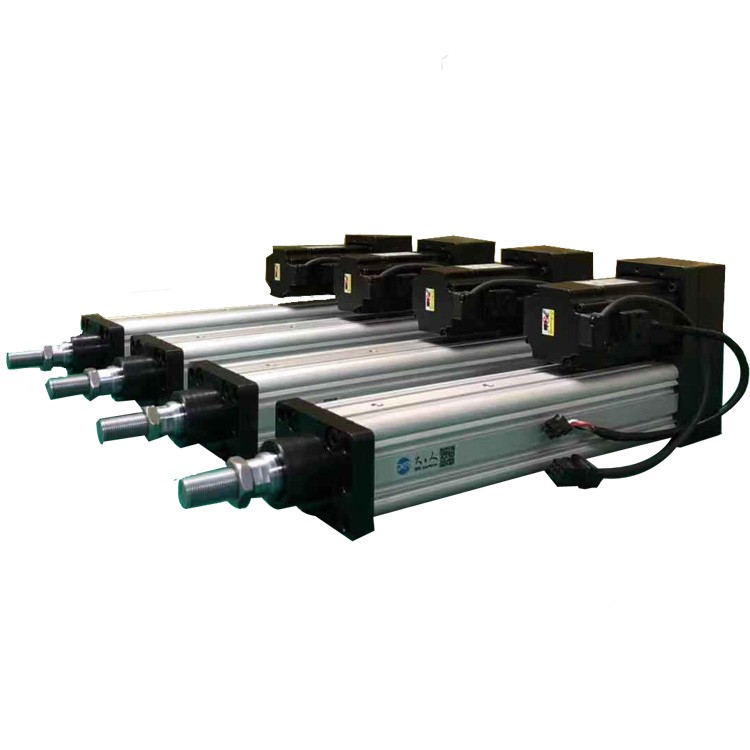
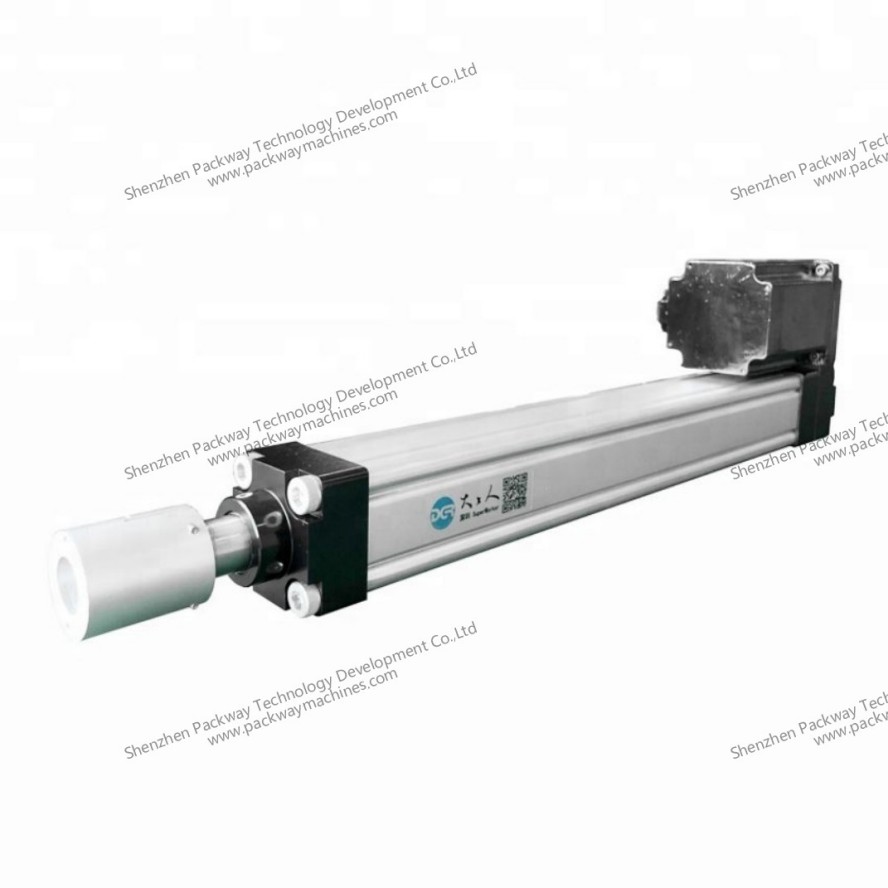
In the rapidly evolving domain of industrial automation, electric cylinders with ball screws have become indispensable assets, steadily gaining traction in the international market. These precision-engineered devices enhance operational efficiency, elevate positioning accuracy, and ensure consistent reliability, making them the preferred choice across a multitude of industries. From automotive assembly lines to advanced medical equipment, their versatility and performance are reshaping industrial processes, one application at a time.
Global Market Dynamics
The global market for electric cylinders with ball screws is witnessing a remarkable growth spurt. Industry giants such as Bosch Rexroth, Rockwell Automation, and Festo are leading the charge, holding substantial market shares. Bosch Rexroth, renowned for its cutting-edge engineering, offers high-performance electric cylinders that are widely adopted in heavy-duty applications like automotive manufacturing and industrial robotics. Rockwell Automation, on the other hand, has been leveraging its expertise in automation solutions to provide integrated systems with electric cylinders at their core, catering to the needs of smart factories worldwide.
However, the market is not without its disruptors. Emerging players from regions like Asia, particularly China and India, are making their mark by offering cost-effective yet high-quality alternatives. Chinese manufacturers, for instance, are capitalizing on their large-scale production capabilities and technological advancements to penetrate the global market. This intense competition is driving innovation and pushing companies to constantly improve their products and services.
Technological Innovations
One of the most notable trends in the electric cylinder with ball screw technology is the pursuit of higher precision. Modern manufacturing processes, especially in industries such as semiconductor manufacturing and medical device production, demand sub-micron accuracy. To meet these stringent requirements, manufacturers are investing heavily in research and development. For example, some companies have developed advanced ball screw designs with improved thread profiles and enhanced lubrication systems, enabling electric cylinders to achieve repeatable positioning accuracy within ±0.01mm.
Another significant innovation is the integration of smart features. With the advent of the Internet of Things (IoT) and Industry 4.0, electric cylinders are now being equipped with sensors and connectivity options. These smart cylinders can collect real-time data on parameters such as position, speed, and load, and transmit this information to a central control system. This not only enables predictive maintenance, reducing unplanned downtime, but also allows for remote monitoring and control, enhancing overall operational efficiency.
Expanding Application Horizons
The applications of electric cylinders with ball screws are expanding far and wide. In the automotive industry, they are used in various assembly processes, from installing engine components to positioning robotic arms for precise welding and painting. Their high force capabilities and precise control make them ideal for handling heavy parts with utmost accuracy.
The renewable energy sector is also a major adopter. In wind turbines, electric cylinders with ball screws are used for pitch control, ensuring that the blades are always oriented at the optimal angle to capture maximum wind energy. In solar power plants, they are employed in solar tracking systems, enabling the panels to follow the sun's movement throughout the day, thereby increasing energy generation efficiency.
Moreover, in the medical field, these cylinders are finding applications in surgical robots and diagnostic equipment. Their ability to provide smooth, precise movements is crucial for delicate medical procedures, where even the slightest error can have serious consequences.
Challenges and Opportunities
Despite the promising growth, the industry faces several challenges. One of the primary concerns is the rising cost of raw materials, especially those used in the production of high-quality ball screws. Fluctuations in the prices of metals such as steel and aluminum can significantly impact the manufacturing costs and, in turn, the final product prices.
Another challenge is the need to comply with strict international standards and regulations. Different regions have varying requirements regarding product safety, environmental impact, and electromagnetic compatibility. Manufacturers must invest in ensuring that their products meet these diverse standards, which can be a complex and costly process.
However, these challenges also present opportunities. The demand for more sustainable and energy-efficient solutions is on the rise. Manufacturers can capitalize on this trend by developing electric cylinders with improved energy efficiency, using eco-friendly materials, and reducing overall environmental impact. Additionally, the growing need for customization in industrial applications offers a chance for companies to differentiate themselves by providing tailored solutions to meet the specific requirements of their customers.
As electric cylinders with ball screws continue to blur the lines between mechanical precision and digital intelligence, they are poised to become the silent architects of tomorrow’s factories. From powering the dexterous movements of next-generation robots to enabling the seamless operation of autonomous vehicles, this technology is set to redefine what’s possible in the industrial age—one micron-accurate movement at a time.