

In a Berlin factory, a technician taps a tablet to adjust the tension of a strapping machine, while 5,000 miles away in Jakarta, a worker manually feeds steel pipes into a rugged Pipe Palletizing And Strapping Unit—two scenes that capture the global divide reshaping the tubing equipment industry. From precision-obsessed workshops in Europe to cost-conscious plants in Southeast Asia, tubing palletizing and strapping machines are evolving in ways that mirror local needs, and the people operating them are learning new skills to keep up.
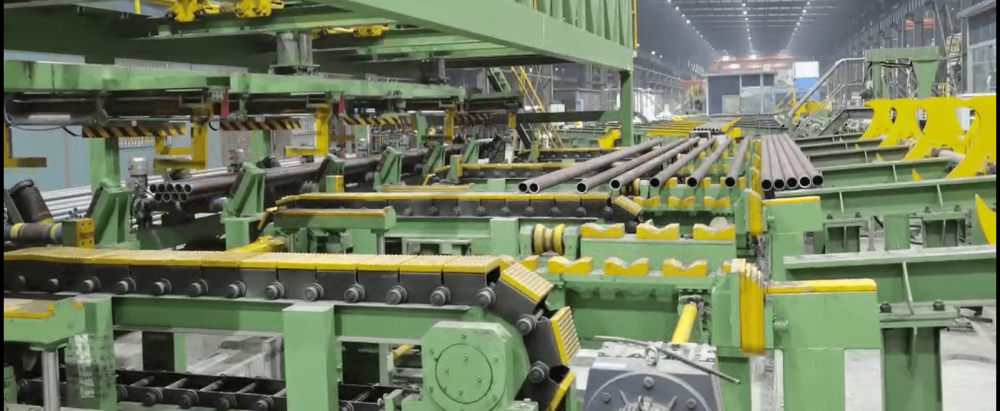
Regional Market Shifts
High-end Markets: Where Precision Meets Flexibility
Walk into a Bavarian aerospace parts plant, and you’ll see why European manufacturers fret over fractions of a millimeter. A robotic arm glides above a stack of aluminum tubes, its grippers wrapped in soft rubber to avoid scratches. Nearby, a strapping machine hums as it applies just 4.2 Newtons of force—enough to hold the tubes tight without warping them. “Aerospace clients reject entire batches if there’s a single scuff,” says Markus Weber, a plant manager. This obsession drives innovation: German firm TITAN’s latest Wire Rod Palletizing And Strapping Machine uses 16 sensors to monitor tube position 100 times per second, tweaking strapping angles mid-cycle to match each tube’s unique curvature.
Flexibility matters too. In the Netherlands, a medical tubing factory switches between 12 tube sizes daily. Their palletizer, fitted with quick-change grippers and AI-powered vision systems, now adjusts to new diameters in 90 seconds—down from 15 minutes three years ago. “Small batches used to be a headache,” says floor supervisor Lotte Janssen. “Now the machine keeps up with our designers’ wild ideas.”
Emerging Markets: Built for Tough Conditions
In New Delhi’s industrial belt, dust hangs thick in the air as a local-made palletizer churns out stacks of PVC pipes. Its control panel is dust-sealed, and the motor can handle voltage swings from 180V to 240V—a must in a city where power cuts hit twice a week. “We tried a European model once,” says factory owner Rajiv Mehta, wiping grease from his hands. “It shut down when the power flickered. This one? It just keeps going.”
Price talks loud here. A Chinese-made strapping machine sells for $12,000 in Jakarta—half the cost of a comparable Italian model. These machines skip fancy sensors but add features like rust-resistant frames for coastal factories in Vietnam and extra-thick cables to survive rodent bites in rural Brazil. “Clients ask for two things: ‘Will it work?’ and ‘Can we afford it?’” says Li Wei, an export manager at a Guangzhou equipment firm.
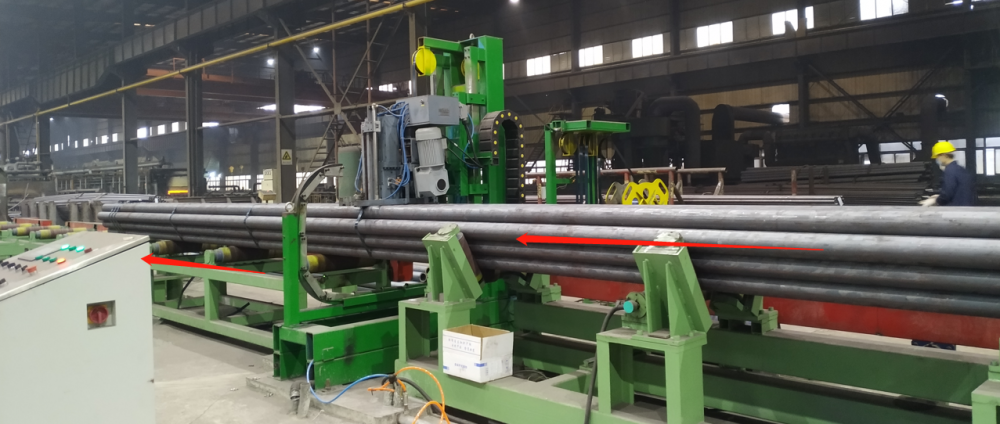
The Changing Hands On the Line
From Buttons to Code: Skills in the West
In Pittsburgh, Mike Carter’s job title changed last year from “Machine Operator” to “Automation Technician.” Once, he pressed buttons to start the strapping machine; now, he writes short code snippets to adjust its rhythm. “Last week, we had a rush order for 3-inch steel tubes,” he says, scrolling through a touchscreen. “I tweaked the palletizing pattern in 10 minutes—something that used to take a maintenance crew half a day.” The Wire Rod High-Speed Packaging Machine he oversees now runs 15% faster than it did six months ago, thanks to his adjustments.
Community colleges are racing to keep up. At a Detroit tech institute, students huddle around a mock production line, learning to calibrate sensors and troubleshoot robotic glitches. “We used to teach people to fix jams with a wrench,” says instructor Jaime Gonzalez. “Now we teach them to read error logs and reset algorithms.”
Bridging Gaps in Growing Economies
In Lagos, a Nigerian worker named Amara Okafor sits in a classroom, jotting notes as a Chinese trainer demonstrates a Pipe Palletizing And Strapping Unit’s maintenance checklist. “The machine came with a manual in Mandarin,” she laughs. “This training? It’s like learning a new language.” Her employer, a steel pipe maker, bought three Chinese machines last year—and with them, a week of on-site lessons.
Governments are stepping in too. In Kenya, a vocational program backed by the government and local manufacturers trains 200 workers monthly in basic machine repair. “These guys used to only know how to load pipes,” says program coordinator Paul Njoroge, gesturing to a group practicing on a donated Wire Rod Palletizing And Strapping Machine. “Now they can fix a jam or adjust tension—skills that mean they earn 30% more.”
Across continents, the story is the same: tubing equipment is getting smarter, and the people using it are changing with it. In Berlin, that technician’s tablet connects to a global network of machines; in Jakarta, that manual palletizer may one day get an upgrade. What won’t change? The need to build tools—and skills—that fit the world where they’re used.