

1. The Transformation of Actuation in Smart Manufacturing
As Industry 4.0 and smart manufacturing continue to reshape global production, factories are evolving from automation to intelligent operation.
In this transformation, actuators—the key components responsible for motion and control—are undergoing a major technological shift from pneumatic and hydraulic systems to electric actuation.
While traditional pneumatic and hydraulic cylinders offer simplicity and low cost, they often fall short in precision, responsiveness, cleanliness, and controllability.
Electric actuators, powered by servo systems, have emerged as a core element of intelligent equipment, providing the precision and flexibility that modern manufacturing demands.

2. Core Advantages of Electric Actuators
-
High Precision Control
Servo electric cylinders enable micrometer-level position control and precise force feedback, meeting the requirements of high-end automation systems. -
Fast Dynamic Response
With millisecond-level response through servo drives, electric actuators are ideal for high-speed sorting, precision testing, and simulation applications. -
Programmable and Network-Ready
Electric actuators support advanced communication protocols such as EtherCAT, Modbus, and CANopen, enabling seamless integration with PLCs and factory networks for real-time data exchange. -
Clean and Energy-Efficient
No hydraulic oil or compressed air is needed. They produce less noise, consume less energy, and align perfectly with green manufacturing standards. -
Low Maintenance
With fewer mechanical components and no fluid systems, maintenance costs and downtime are significantly reduced.

3. Rapid Growth Across Key Industries
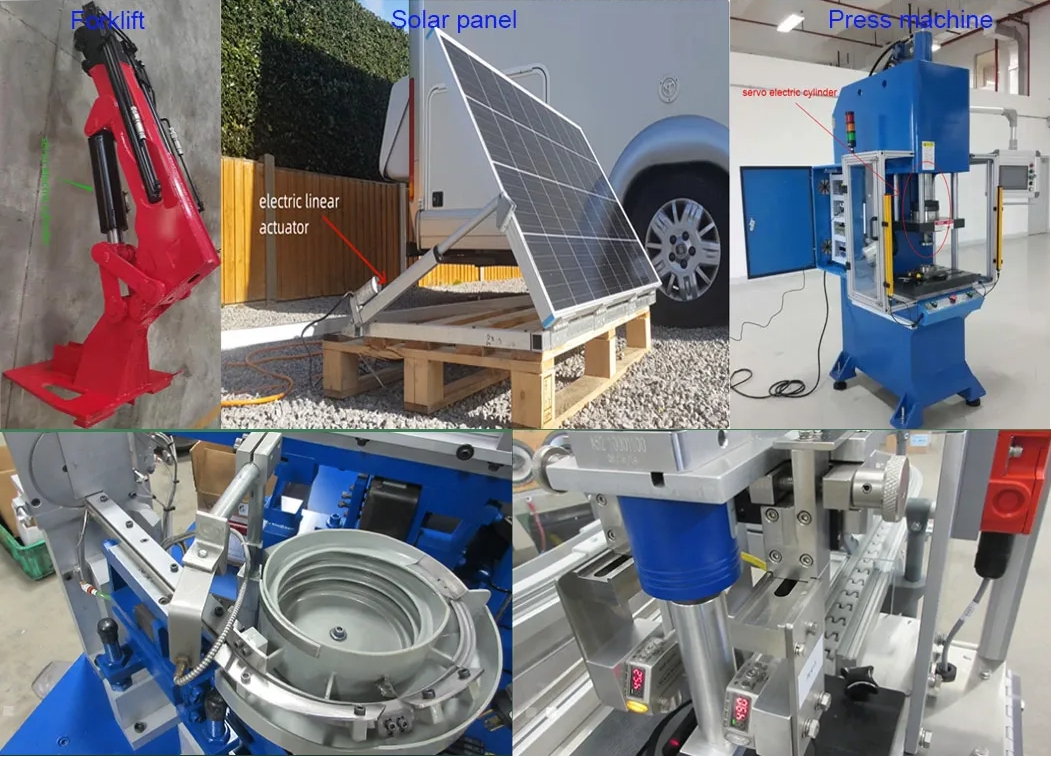
Electric actuators are increasingly used in a wide range of intelligent manufacturing applications, including:
-
Automated Production Lines – handling, pressing, assembly, and precision testing tasks.
-
Semiconductor & Electronics – where high cleanliness and repeatability are critical.
-
New Energy & Photovoltaic Equipment – for positioning, clamping, and inspection systems.
-
Intelligent Testing & Laboratory Equipment – offering controllable force, displacement, and speed.
-
Simulation & Motion Platforms – supporting 6DOF motion systems in driving or flight simulators.
As these industries continue to automate and digitize, the demand for high-performance electric actuators is expected to grow rapidly.
4. Future Development Trends
-
Higher Precision and Faster Response
Continued optimization of servo algorithms will further improve control accuracy and dynamic performance. -
Modular and Integrated Design
Actuators will increasingly integrate sensing, control, and communication into compact smart modules. -
Data-Driven Predictive Maintenance
Through IIoT connectivity, actuators will enable real-time monitoring, predictive maintenance, and adaptive control. -
Localization and Customization
Domestic manufacturers are advancing rapidly, providing customized and cost-effective electric actuators for diverse industrial needs.